Şangay Shenghua Kablo (Grup) Co, Ltd

Shenghua Kablosu'nun pratik rehberi
Doğru kablo kesit alanını seçmek, elektrik güvenliği, verimliliği ve maliyet etkinliği için çok önemlidir.Bilimsel bir yaklaşım uzun vadeli güvenilirlik ve en iyi performansı sağlarOn yıllık deneyime dayanarak,Shenghua Cable (Shanghai Shenghua Cable Technology Group Co., Ltd.)farklı uygulamalar için doğru kablo kesimini belirlemek için dört pratik yöntem sunar.
Shenghua Cable'in tüm ürün yelpazesini burada keşfedin:https://www.shanpowercable.com/
En basit yöntem, kablonun uzunluğunu aşmamasıdır.Uzun süreli çalışma sıcaklığıNormal yük altında.
PVC yalıtımlı kablo:70°C
XLPE yalıtımlı kablo:90°C
Örnek:
Transformörün gücü: 2500 kVA
Besleme voltajı: 10 kV
Kablo türü: XLPE, kablo köprüsüne yerleştirilmiş
Adım 1: İsimlendirilmiş akımı hesapla
I=250010.5*1.732≈137AI = frac{2500}{10.5 çarpı 1.732} yaklaşık 137A
Adım 2: Kablo el kitabını kontrol edin
YJV-8.7/10KV-3X25 → 120A
YJV-8.7/10KV-3X35 → 140A
Adım 3: Kabloyu seçin
YJV-8.7/10KV-3X35 137A'yı karşılar
Not:Bu yöntem, voltaj düşüşünü veya kısa devre termal istikrarını hesaba katmaz.
Bu yöntemmalzeme maliyetiveGüç kaybıDaha küçük kablolar yatırımı azaltır, ancak kayıpları artırır; daha büyük kablolar kayıpları azaltır, ancak maliyeti artırır.Ekonomik akım yoğunluğu(A/mm2) ekipmanın çalışma saatlerine göre.
Örnek:
Ekipmanın nominal akımı: 150A
Yıllık çalışma saatleri: 8000 saat
Ekonomik akım yoğunluğu: 1.75 A/mm2
S=Iekonomik yoğunluk=1501.75≈85.7 mm2S = frac{I}{text{ekonomik yoğunluk}} = frac{150}{1.75} yaklaşık 85.7 text{ mm2}
Adım 2: En yakın standart boyutu seçin→ 95 mm2
Bu yöntem hem güvenliği hem de maliyet etkinliğini sağlar.
Uzun kablo sürüşleri için, voltaj düşüşü önemli hale gelir ve ekipmanın çalışmasını etkileyebilir.%7 400V hattı için.
Voltaj düşüşü formülü:
S=I⋅ρ⋅LΔUS = frac{I cdot rho cdot L}{Delta U}
IIBen...= nominal akım
- Evet.ρ= iletken direnci
LLL= kablo uzunluğu
ΔUDelta UΔU= izin verilen gerilim düşüşü
Örnek:
Aygıt voltajı: 380V
Adlık akım: 150A
Bakır kablo direnci: 0,0175 Ω·mm2/m
Kablo uzunluğu: 600 m
İzin verilen gerilim düşüşü: 26.6V
S=150*0.0175*60026.6≈59.2 mm2S = frac{150 çarpı 0.0175 çarpı 600}{26.6} yaklaşık 59.2 text{ mm2}
Adım 2: En yakın standart boyutu seçin→ 70 mm2
Bu, uzun kablo yolları boyunca gerilim istikrarını sağlar.
Orta ve yüksek voltajlı kablolar için (≥6 kV), kesit seçimi,Kısa devre termal istikrar.
Formül:
Smin=IdtiCS_{text{min}} = frac{I_d sqrt{t_i}}{C}
İd_dBen...d- Hayır.= kısa devre akımı
başlıktBen- Hayır.= kesicinin kesilme süresi
CCC= kablo termal katsayısı (genellikle 80)
Örnek:
Kısa devre akımı: 18 kA
Isı katsayısı: 80
Kesme süresi: 0.25 s
Smin=18000*0.2580≈112.5 mm2S_{text{min}} = frac{18000 çarpı sqrt{0.25}}{80} yaklaşık 112.5 text{ mm2}
Adım 2: En yakın standart boyutu seçin→ 120 mm2
İsimlendirilmiş akım küçük olsa bile, kablo kısa devre gerginliğine dayanmalıdır.
Bilimsel seçilim yöntemlerini kaliteli üretimle birleştirerek,Shenghua Kablosuaşağıdakileri sağlar:
Güvenlik ve verimlilik için doğru kesit boyutlandırması
Güvenilir termal ve elektrik performansı
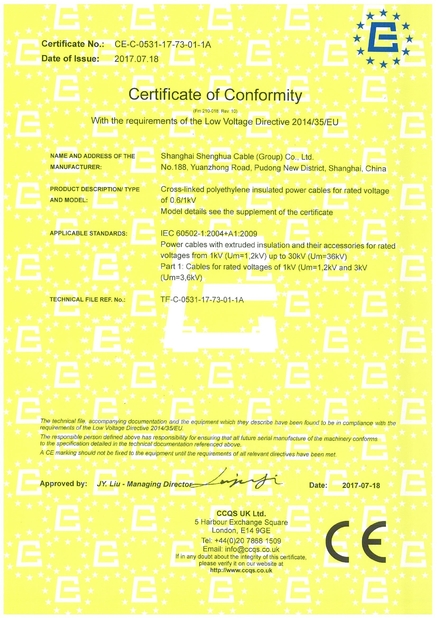
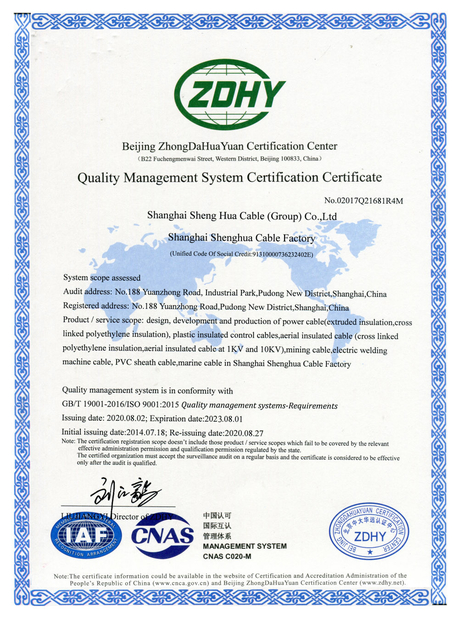
Uluslararası standartlara ve sertifikalara uygunluk
Endüstriyel ve elektrik dağıtım sistemlerinde uzun süreli dayanıklılık
Shenghua Cable, proje özel kablo boyutları için tam rehberlik ve teknik destek sunar.
Ürün portföyümüzü keşfedin:https://www.shanpowercable.com/
Doğru kablo kesimi alanını seçmek, deneyimi takip etmekten daha fazlasını gerektirir.Uzun vadeli akım kapasitesi, ekonomik yoğunluk, voltaj düşüşü ve kısa devre termal istikrarı, mühendisler güvenli, güvenilir ve uygun maliyetli kurulumlar sağlayabilir.
Shenghua KablosuTeknik uzmanlığı kaliteli malzemelerle birleştirerek zamanın denemesine dayanan çözümler sunar.